
What is robotic surgery?
Robotic surgery is a type of minimally invasive surgery, similar to laparoscopic (keyhole) surgery. Rather than a large open incision, the surgeon operates through several small cuts in the abdomen. The difference lies in how the surgeon controls the instruments: the surgeon sits at a console and guides robotic arms that hold the camera and surgical instruments inside the patient. The robot does not move or operate on its own — every action is controlled by the surgeon in real time, throughout the entire procedure.
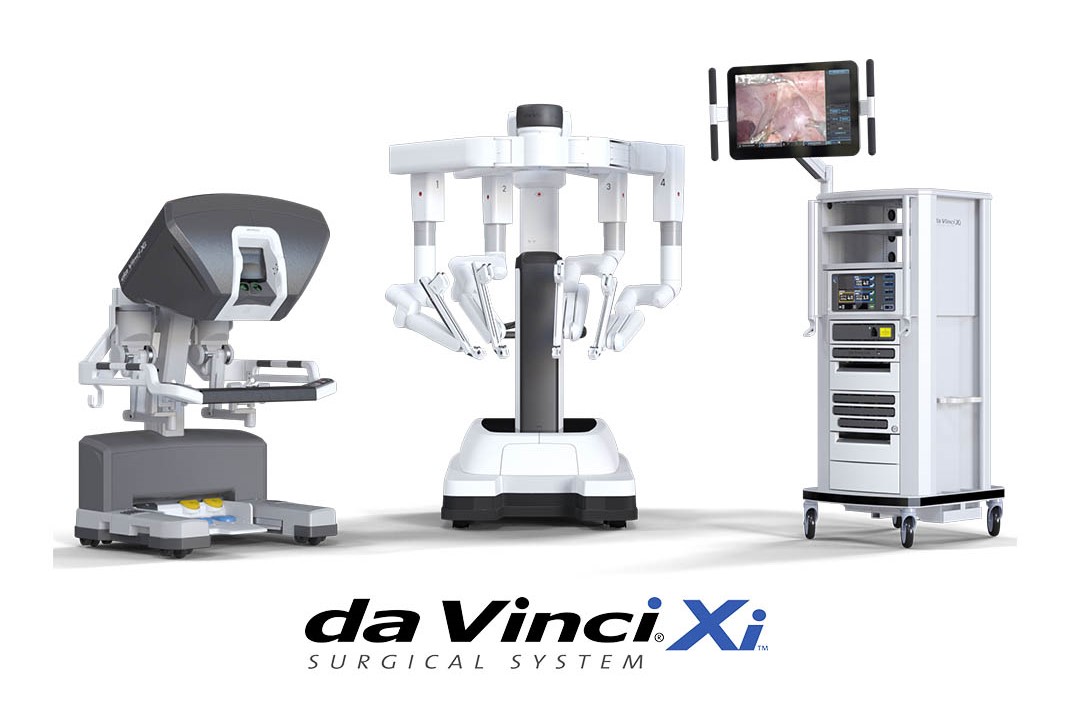
How is robotic colorectal surgery performed?
Several small incisions are made in the abdomen. Carbon dioxide gas is used to inflate the abdominal cavity, creating space to operate. Slim robotic instruments and a high-definition 3D camera are then inserted through these incisions and attached to the robotic arms. The surgeon sits at a nearby console, viewing a magnified three-dimensional image of the abdomen, and controls the instruments using hand and finger movements that are translated precisely to the robotic arms. As with laparoscopic surgery, if a colonic resection is being performed, one of the incisions is often extended slightly to allow removal of the resected bowel.
How does robotic surgery differ from laparoscopic surgery?
Both techniques are minimally invasive and share many of the same benefits over open surgery. Robotic surgery adds some further advantages, which can be particularly useful in more technically demanding colorectal procedures, such as rectal cancer surgery:
-
- Magnified, high-definition 3D view of the surgical field, compared to the 2D view used in standard laparoscopy
- Greater range of motion in the instruments, allowing more precise movement in the confined space of the pelvis
- Filtering of natural hand tremor, supporting fine and controlled dissection
- Improved surgeon precision and control, particularly near delicate nerves and structures affecting bowel, bladder, and sexual function
- Potential for more precise nerve-sparing dissection in complex pelvic surgery
Recovery time and incision size are generally similar to laparoscopic surgery. However, a recent review of robotic colorectal resections performed at our colorectal unit at Nepean Hospital showed a reduced rate of conversion to open surgery and a reduced length of hospital stay compared with the laparoscopic approach.
Am I a candidate for Robotic surgery?
If you are considering surgery for a colorectal condition, I am happy to discuss whether a robotic approach may be suitable for you.